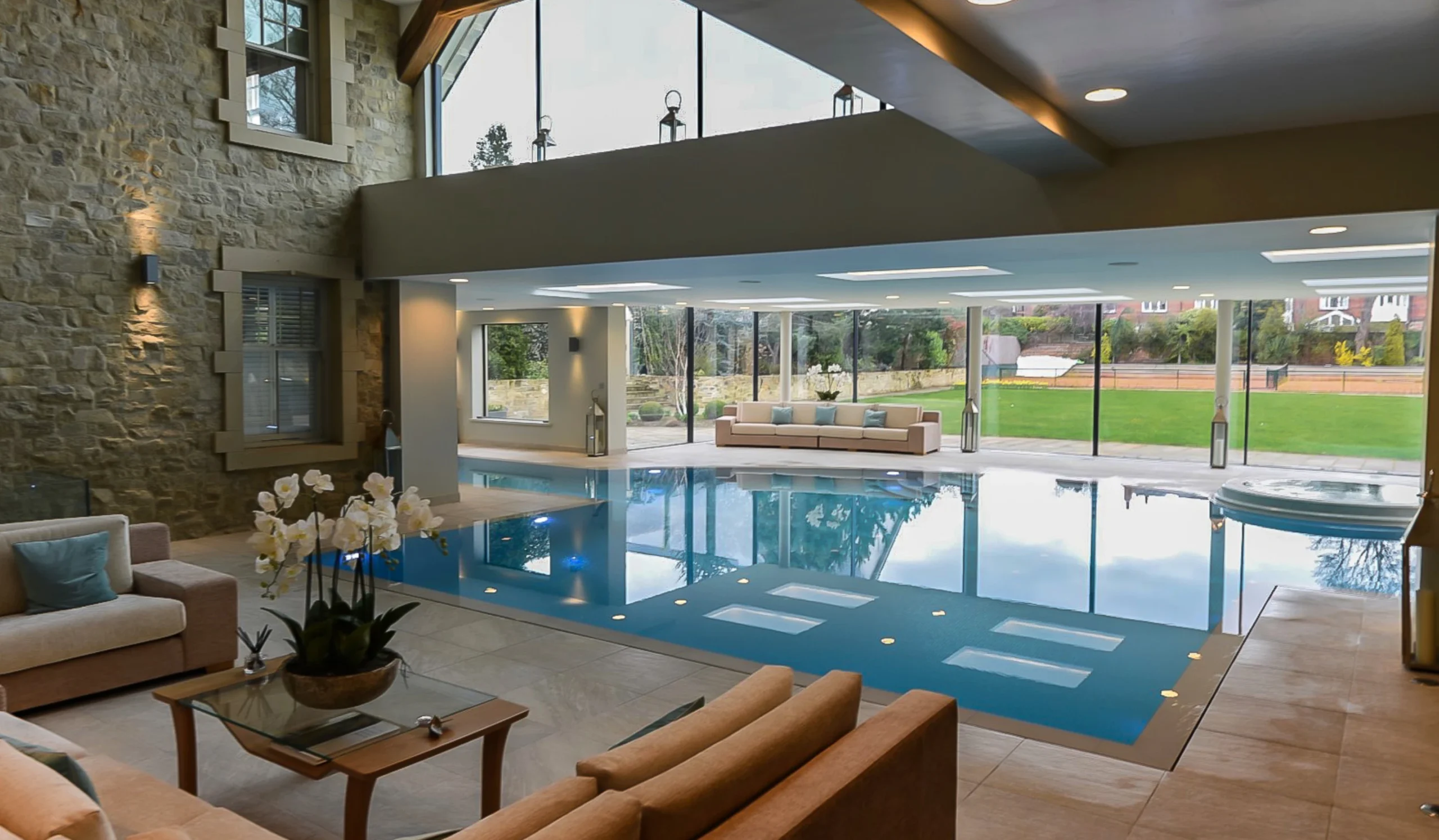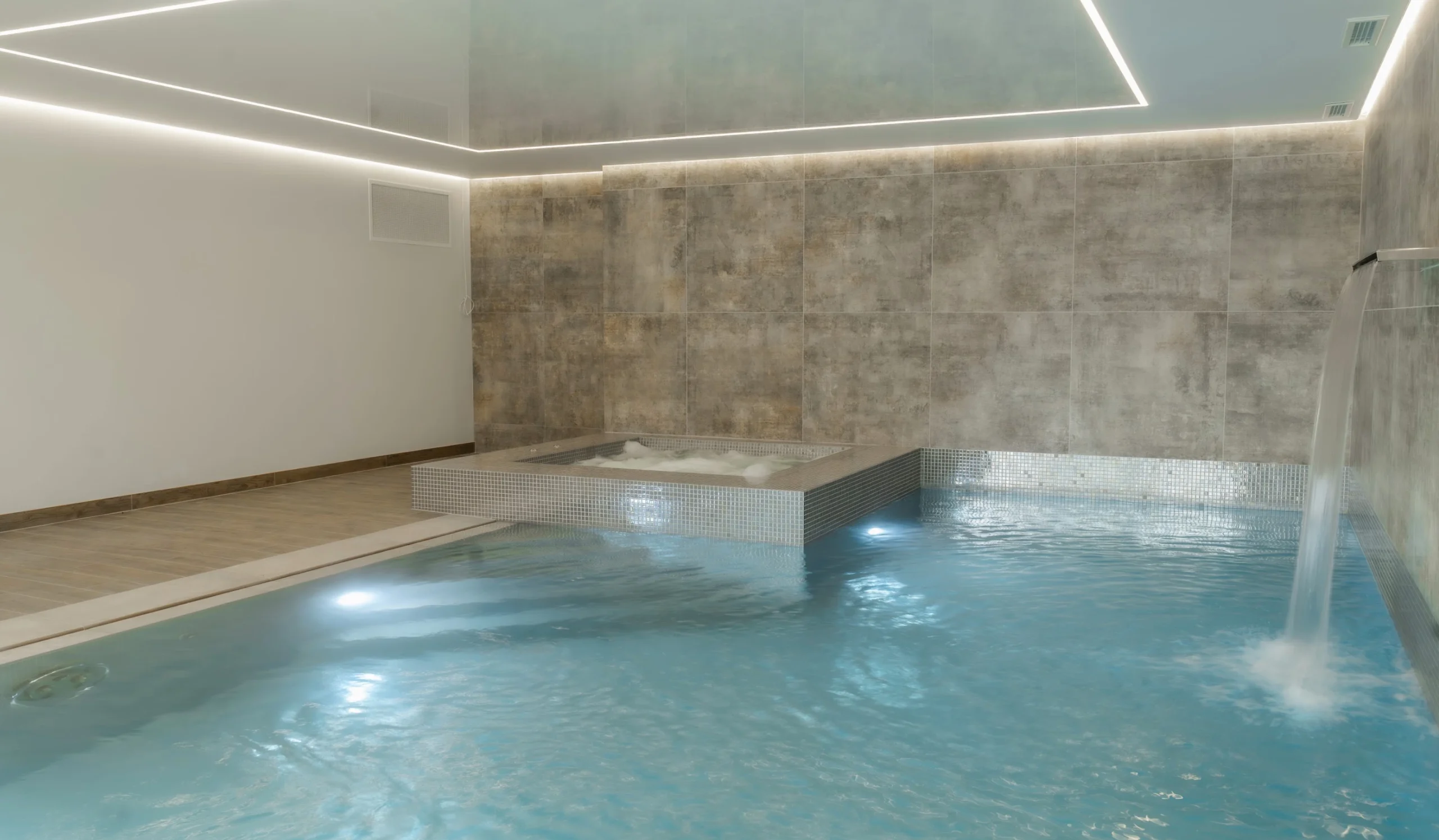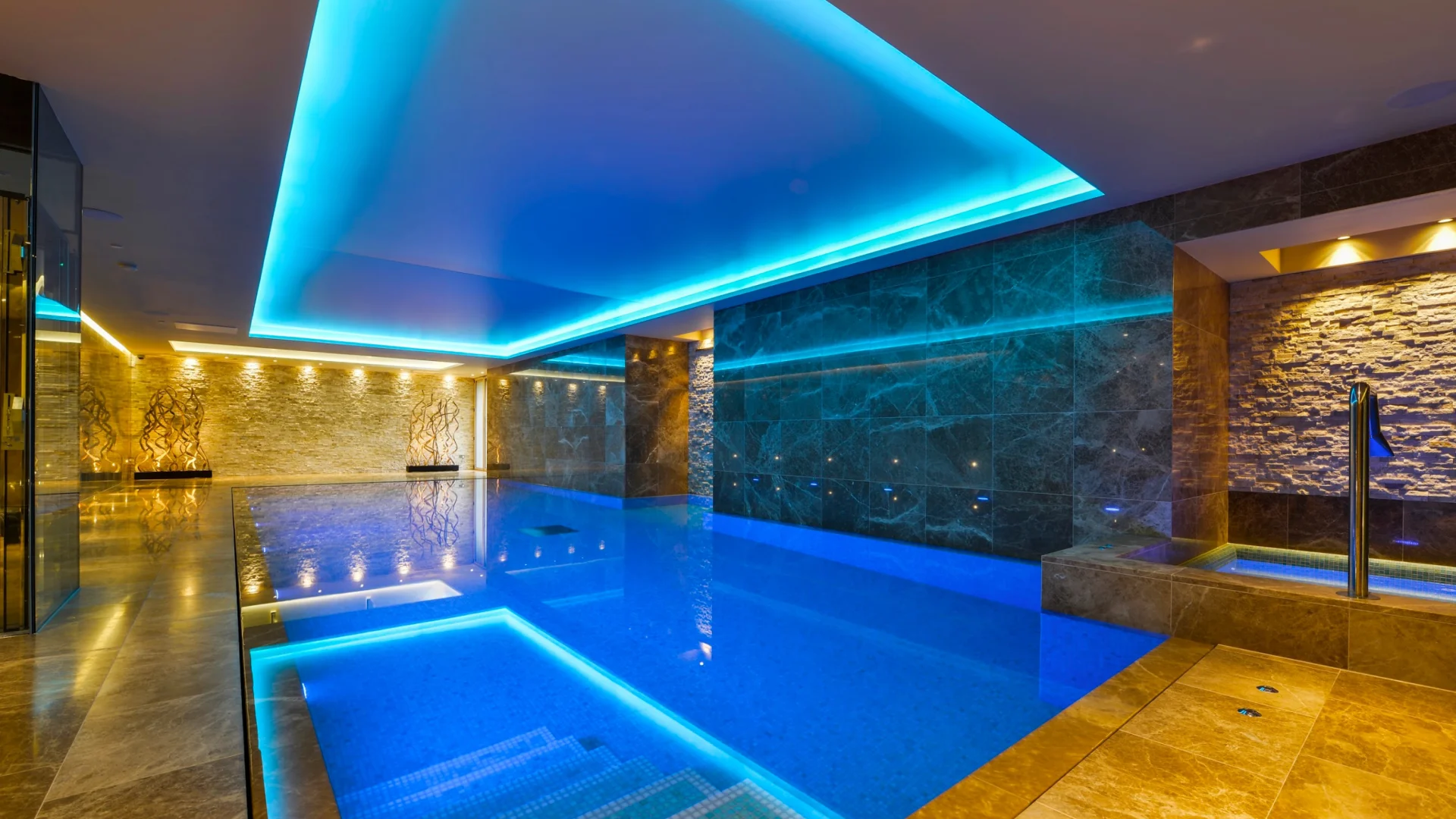
The word “bespoke” is used freely in the pool industry, often to describe little more than a choice of tile from a limited range fitted around a standard shell. A genuinely bespoke swimming pool is a different proposition: a structure designed from first principles around a specific site, a specific household, and a specific way of using water, rather than adapted from something that already exists. Understanding what separates the two is useful for anyone weighing up bespoke swimming pools, and it is the question this guide sets out to answer.
Bespoke Versus Off-the-Shelf
An off-the-shelf pool begins with a manufacturer’s mould or a fixed set of dimensions, and the design conversation is largely about which of those fixed options comes closest to what you want. Bespoke swimming pools begin with a blank canvas instead — the site, the architecture of the property, and the intentions of the people who will use it — and the dimensions, structure and finishes are then developed to answer those specific circumstances. Every Preston Pools commission starts this way: a lap pool built for daily fitness, a hydrotherapy pool built around a clinical need, or a statement indoor pool built as the centrepiece of a home are three entirely different design problems, and bespoke pool design treats them as such rather than forcing them through a shared template.
The Design Decisions That Make a Pool Bespoke
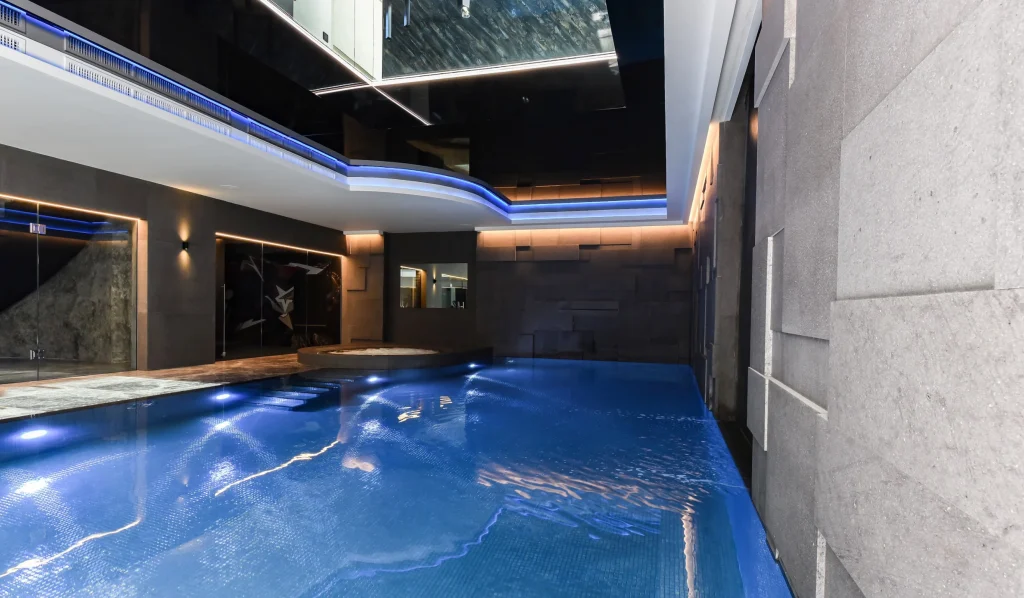
A handful of decisions, taken together, are what actually distinguish a bespoke pool from a standard installation.
Shape, dimensions and siting. Dimensions should follow purpose rather than convention. A pool built for serious swimming is typically specified between 12 and 25 metres, with depth and lane width calibrated to stroke and training goals, while a hydrotherapy pool is sized and shaped around access, movement, and the specific therapeutic requirements of the person using it. Siting matters just as much: an outdoor pool needs to be positioned in response to the contours of the land and the orientation of the property, while an indoor or basement installation is shaped by the structural and spatial realities of the building around it.
Materials and finishes. Tiling is where the character of a pool is most visibly expressed, and a bespoke build draws on a genuine range of materials — natural stone such as limestone and travertine, glass mosaic in iridescent or tonal finishes, large-format or honed porcelain, and metallic finishes in bronze or champagne — selected for how each performs underwater as well as how it looks. Precision colour gradients and bespoke motifs are only possible when the tiling team is working to a design rather than fitting a standard pack.
Edge details. The edge of a pool carries more engineering than its appearance suggests. A conventional coped edge is a different technical exercise from an infinity edge, where a weir wall is set fractionally below the main waterline so that water spills continuously into a hidden catch basin before returning through the filtration circuit. Getting that weir level right across its full length is what determines whether the finished edge reads as a seamless sheet of water rather than an uneven one — and it is a decision that has to be made at the design stage, not adjusted afterwards.
Heating and environmental control. A bespoke pool is specified for how and when it will actually be used. Outdoor pools built for year-round use call for frost-resistant finishes, insulated shell construction, and energy-efficient heating paired with a considered thermal cover specification, so the pool remains usable well beyond a British summer. Indoor and basement pools depend on precisely calibrated ventilation and dehumidification to protect both the building and the comfort of the space. Hydrotherapy pools run at therapeutic temperatures of 34–36°C, which places greater demands on filtration, water treatment and energy management than a standard installation. Underpinning all of this, Preston Pools specifies the Dryden Aqua SPACE system for clients who want their water managed intelligently, with AI-driven chemical dosing, optimised backwashing, and automatic water levelling.
Lighting. Architectural lighting is treated as part of the design rather than a fitting added at the end — layered schemes combining concealed coves, underwater LED, and feature lighting that animates the water’s surface differently through the day, all planned alongside the pool’s structure and materials rather than retrofitted around them.
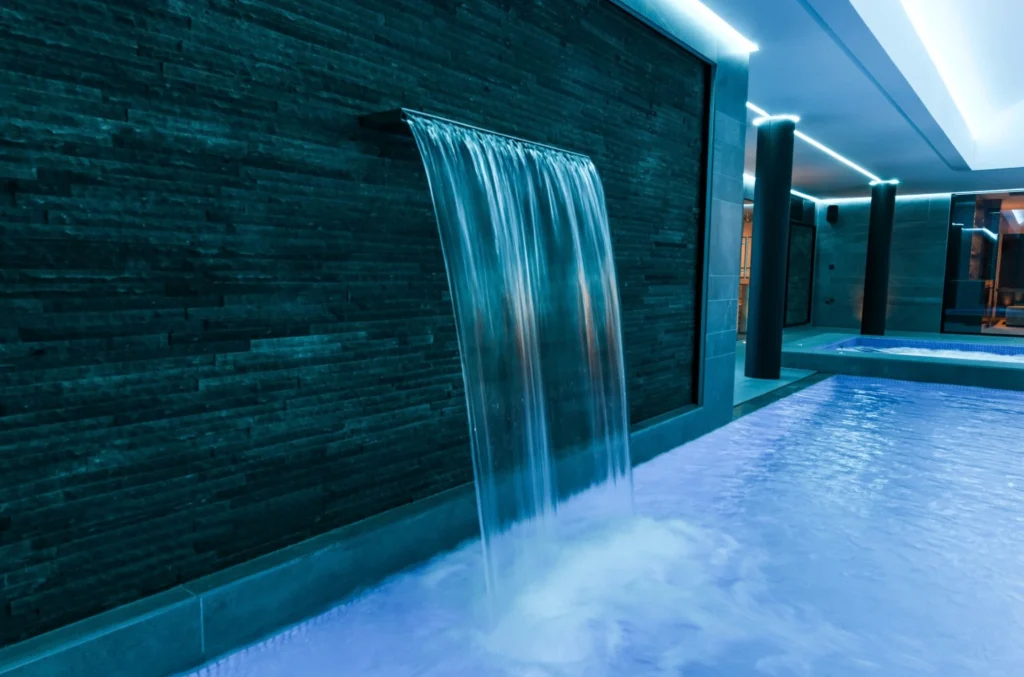
Water features. Cascade walls, blade falls, rain curtains, deck-level jets and sculptural spouts each bring movement and sound to a pool environment, but every one has to be engineered into the pool’s hydraulic system from the outset rather than bolted on. The same is true of custom jacuzzis and spa installations, whether integrated into the main pool shell or built as a standalone feature, where jet configuration, seating and temperature control are specified to the client rather than chosen from a catalogue.
Access and inclusion. For hydrotherapy and accessible pools, bespoke design extends to how a person enters the water at all. Submersible platforms, hoists, and gentle-gradient ramps are specified around individual mobility needs — sometimes in consultation with a clinical or therapeutic team — so that access is safe, dignified and independent rather than an afterthought bolted onto a standard pool.
Taken individually, none of these decisions is exotic. Taken together, and made in the right order, they are what bespoke swimming pools actually consist of.
How the Bespoke Design Process Works
None of the above happens by accident, which is why the design process itself matters as much as the finished pool. As bespoke pool builders working across the North of England, Preston Pools works to a six-stage process our swimming pool designers work to that begins with an initial consultation and site assessment, evaluating the structural realities of the property alongside how the client actually intends to use the pool. Design development follows, where proportions, materials, lighting and the relationship between the pool and its surroundings are settled before any construction begins. An engineering and technical specification stage then addresses the structural, hydraulic, filtration and heating requirements in detail — the invisible work that determines how a pool performs for decades rather than years.
Construction and project management are carried out with eighteen in-house specialists and nine fully equipped vehicles, allowing the process to run without relying on subcontractors for critical works, refined over two decades and thousands of projects. Finishing and commissioning brings together the bespoke tiling, water features and lighting covered above, each inspected and tested before handover, with aftercare and ongoing support continuing well beyond that point. Many of the pool features described in this guide — the tiling, the water features, the jacuzzi installations — are only achievable because they are considered from the design stage onward within this same process, rather than specified separately once construction is underway.
The same process applies whatever form the pool takes, whether that is a luxury indoor or basement pool, an outdoor or infinity-edge pool built to withstand the North of England’s climate, a lap or fitness pool calibrated to a swimmer’s technique, or a hydrotherapy or accessible pool designed around a specific therapeutic need. What changes between projects is the set of decisions described above; what stays constant is the process used to make them properly.
Considering a Bespoke Pool
Bespoke swimming pools are, in the end, defined less by any single feature than by the fact that every decision — shape, siting, materials, heating, lighting, water features and access — has been made specifically for one site and one household, rather than selected from what happens to already exist. The results of that approach across two decades of commissions can be seen in the Preston Pools portfolio. If you are considering a bespoke pool for your own property, get in touch to arrange a design consultation with the team.