A swimming pool does not stop working overnight. It slowly gets tired: the tiles lose their finish, the equipment in the plant room starts to feel dated, and the pool becomes something you manage rather than something you enjoy. For many owners the question is not whether to build a new pool, but whether the one they already have can be brought back to its best. That is what swimming pool refurbishment is for.
This guide explains the signs that a pool is ready for work, what a refurbishment can involve, how the process works and what to think about before you start. It applies to indoor and outdoor pools, and to owners who have lived with a pool for years as well as those who have just bought a property with one.
What a swimming pool refurbishment means
Refurbishment is the work of restoring and upgrading an existing pool rather than building a new one. Preston Pools undertakes the refurbishment of existing swimming pools, from ageing installations that no longer meet the standard their owners expect to pools that came with a newly acquired property. The work can be as focused as a complete retile or as broad as a full modernisation of the filtration, heating and control systems.
You will see the words renovation and refurbishment used interchangeably. In practice, domestic swimming pool refurbishment is simply the home-owner version of the same idea: keep what is sound, replace or upgrade what is not, and finish the pool to a standard you are happy to live with.
Signs your pool needs refurbishing
Every pool is different, but these are the signals that most often tell an owner it is time to look at the pool properly:
- The finish looks tired or dated. Worn, stained or old-fashioned tiling is the most visible sign, and often the first one owners notice.
- The plant room feels out of date. Older filtration, heating and control equipment can be harder to run and harder to service than modern systems.
- Running the pool takes more effort than it should. A pool that needs constant attention, or that costs more to heat than you expect, may be telling you its equipment is no longer suited to it. A well-specified heat pump, cover and heat-recovery system reduces running costs compared with an older or uninsulated setup.
- There are signs of structural wear. Cracking, movement or anything that suggests the shell is no longer in good order should be looked at by a specialist rather than left.
- Access no longer suits the people using it. Needs change over time, and the steps or entry you installed years ago may not be right for everyone now.
- You have bought a property with a pool you did not choose. A pool that needs attention is a common reason owners ask for an assessment.
None of these signs means the whole pool has to be rebuilt. Often the shell is sound and the work is about what sits around, inside and behind it.
What a refurbishment can involve
The scope depends on the pool and on what you want from it. Based on the work Preston Pools carries out, a refurbishment can include:
Tiling and finishes
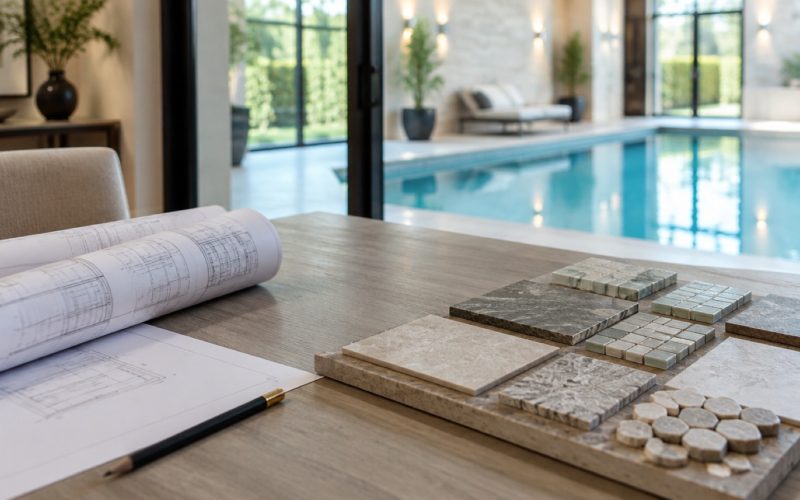
A complete retile is often the biggest visual change. Tiling is where the personality of a pool is expressed, and the options include natural stone, glass mosaic, porcelain and metallic finishes, each chosen for slip resistance and performance in a submerged environment. Our features page shows the range of tiling and material finishes we work with.
Plant room and equipment
A plant room upgrade can transform how a pool runs. Refurbishment can mean a full modernisation of filtration, heating and control systems. Preston Pools advocates the Dryden Aqua SPACE system for its clients, which handles chemical dosing, backwashing and water-level top-up automatically. Whether a particular system suits your existing plant room is something a survey would establish.
Structural repairs
Where the existing structure needs attention, structural repairs form part of the scope. This is why an honest assessment at the start matters: it tells you what the pool genuinely needs before you commit to anything.
Covers, lighting and access
Refurbishment is also the moment to add things the pool never had. Tony’s pool in Westby, for example, gained a retrofitted automatic cover, a stretched vinyl ceiling with LED lighting, and modern wall-mounted steps and rails. For outdoor pools, a cover and the right heating approach make a difference to how much of the year the pool can be used; our guide to outdoor swimming pool heating options compares the main routes if you are thinking about an outdoor swimming pool renovation.
If access is the priority, Preston Pools designs hoists, ramps, submersible platforms and level-deck entries for its accessible pools. How far these can be added to an existing pool depends on the pool itself, so raise it at the first conversation.
A refurbishment in practice: Tony’s Pool, Westby
The clearest example from our own work is Tony’s Pool in Westby. Tony wanted to transform a tired, dated indoor diving pool into a modern swimming environment. The brief was a full refurbishment rather than a new build, bringing an existing 8m skimmer diving pool up to a contemporary standard without rebuilding the shell.
That last point is typical of refurbishment. The existing shell, including two radiused corners at the top of the pool, had to be worked with rather than around. Fitting a modern automatic cover to an existing pool, and adding wall-mounted access, called for bespoke manufacture and careful integration with the original structure.
The pool was retiled in a pearlescent white tile that draws out blue tones underwater. A hidden cave was built to house a bespoke automatic cover made to fit the radiused corners, and modern wall-mounted steps and rails let the cover close fully. A high-gloss stretched vinyl ceiling with LED lighting finished the room. The result was a complete transformation of the original pool, and the project took around six months.
How a refurbishment works
Refurbishment follows the same design-and-build approach as a new pool, starting with a survey of the existing pool. From there the scope is agreed and the work is planned, engineered and carried out by our in-house team, and the project finishes with commissioning and a handover. You can read more about how we work on our process page.
Planning your refurbishment
A few things are worth settling early.
- Decide what matters most. Is it how the pool looks, how it runs, or how it is used? Clear priorities help to shape the scope and the order of work.
- Expect the unexpected inside an old pool. Refurbishment work brings its own constraints, because you are working with an existing structure. A proper assessment reduces surprises, but it is sensible to treat the first survey as the point where the real scope becomes clear.
- Think about the whole system, not just the surface. A fresh finish on tired plant is a missed opportunity. Looking at filtration, heating and controls at the same time often makes more sense than returning to the job later.
- Check consents. Some work may need permission, especially on listed buildings or in conservation areas. Check with your local planning authority, and see our guide to swimming pool planning permission in the UK.
- Understand what drives the cost. Cost depends on the condition of the existing pool, the scope of work, the plant specification and the finishes chosen. We quote every project individually, and our guide to swimming pool costs in the UK explains what shapes the price.
Frequently asked questions
Do you refurbish pools you did not build?
Preston Pools undertakes the refurbishment of existing swimming pools. If you have a pool that needs restoring, or you have acquired a property with a pool that requires attention, we would welcome the chance to assess the work required and advise on the best course of action.
Is refurbishing cheaper than building a new pool?
It depends on the condition of the pool and what you want from it, so we do not give a blanket answer. A site assessment shows what the pool genuinely needs, and every project is quoted individually after a site visit.
Can you refurbish an indoor pool?
Yes. Tony’s Pool in Westby was an existing indoor diving pool brought up to a modern standard without rebuilding the shell.
Can you add an automatic cover to an existing pool?
It can be done, but it needs care. At Tony’s Pool the cover had to be manufactured to suit the existing shape of the pool and housed in a purpose-built cave. Whether it suits your pool is something we would check at the assessment.
Do I need planning permission to refurbish my pool?
It depends on the work and the property. Like-for-like work is a different question from changing the structure, and listed buildings and conservation areas need extra care. Check with your local planning authority, and we can advise on the position for your property.
What support do I get after the work is finished?
Commissioning includes water treatment balancing and system calibration, and a handover with documentation and guidance on maintaining your pool. We offer ongoing guidance after handover and can recommend trusted maintenance providers in your area.
If your pool is ready for a new lease of life, see how we work or get in touch to arrange an assessment.