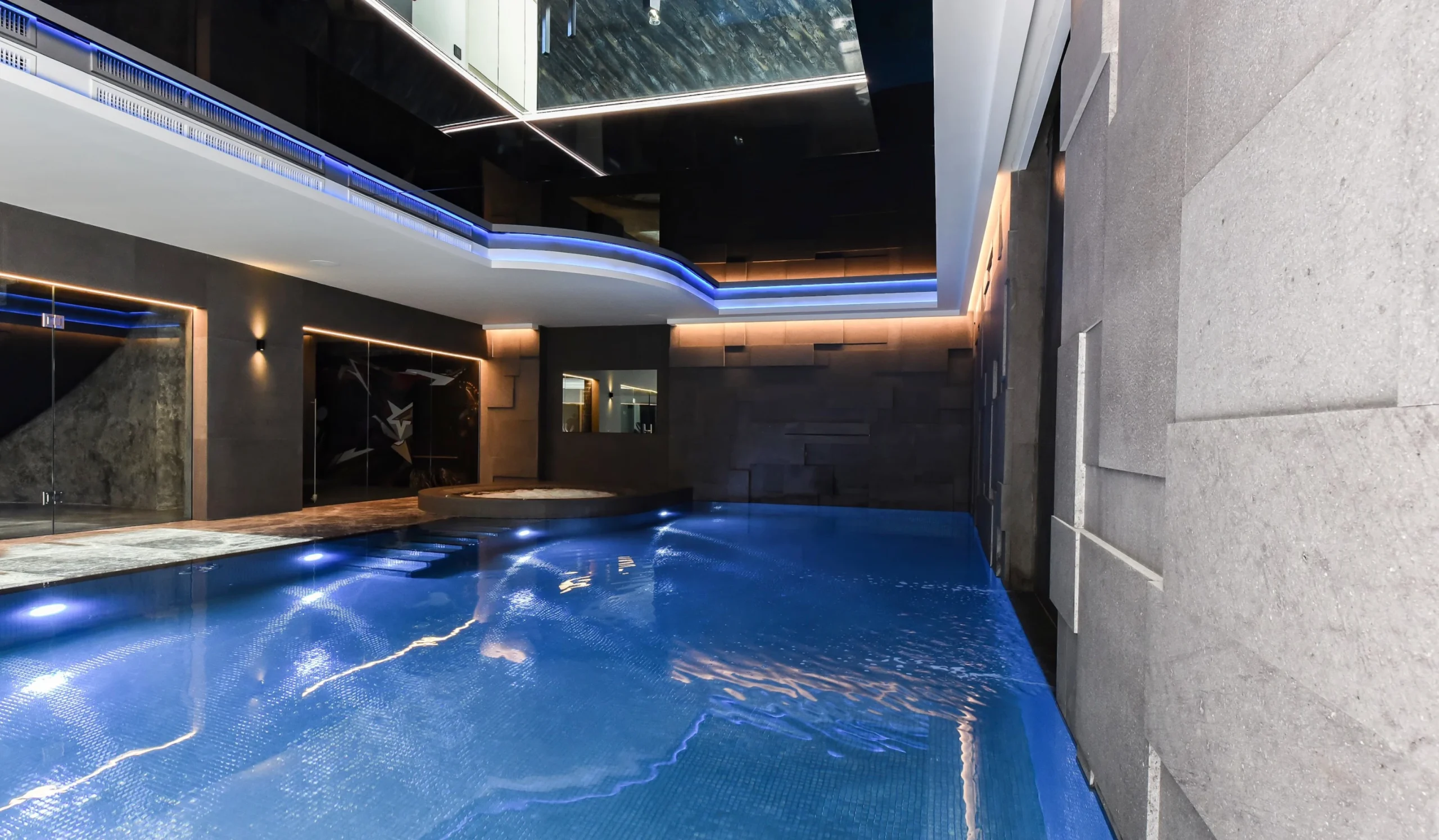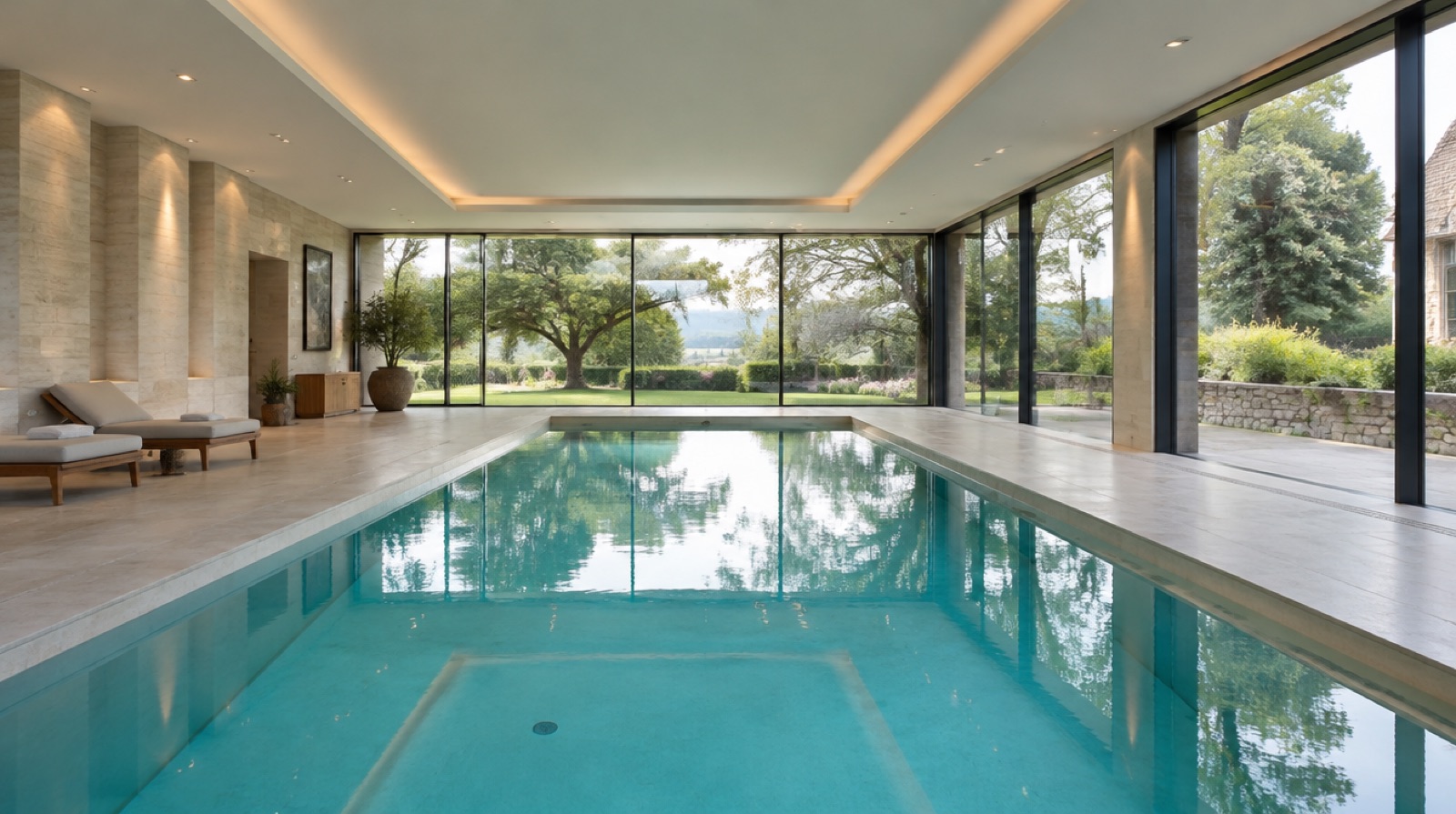
The choice between an indoor and an outdoor swimming pool comes down to how often you want to swim. An indoor pool can be used every day of the year, whatever the British weather, but it is a building project as well as a pool. An outdoor pool brings the garden and the landscape into play and is usually the simpler structure, but in the UK its season depends heavily on heating and covers. Most families know which way they lean once they have answered four questions: when will we swim, where will the pool go, what will it need, and how do we want it to feel?
This guide compares the two honestly, so you can make that decision with confidence.
Year-Round Use: The Deciding Factor for Most Families
An indoor pool is the only way to guarantee swimming in January. It suits daily fitness swimming, families who want the pool to be part of the home all year, and anyone using a pool for therapy or rehabilitation, where consistent water and air temperatures matter. If training is the priority, our lap and fitness pools are designed for exactly that, indoors or out.
An outdoor pool is a seasonal pleasure in the UK. With good heating and a cover the season can be extended well beyond the height of summer, and on a still, sunny day there is nothing quite like it. But it will always be governed by the weather in a way an indoor pool is not.
If you picture yourself swimming before work on a dark winter morning, the answer is almost certainly indoors.
What an Indoor Pool Involves
An indoor pool puts a large body of warm water inside a building, and that changes the engineering. The three things that matter most are structure, air and integration.
- Structure. Whether the pool sits in an extension, a pool house or a basement, the shell, tanking and waterproofing have to be designed for the site. Basement pools in particular need structural engineering from the outset; our guide to basement swimming pool conversions explains what is involved.
- Air handling. Warm water releases moisture constantly. Without correctly sized ventilation and dehumidification, condensation will damage the building fabric. We specify Recotherm dehumidification units within our indoor installations, designed alongside the heating so the room stays comfortable.
- Integration with the home. Lighting, acoustics, the relationship between the pool hall and the rest of the house, and a quiet, accessible plant room all need designing together, ideally with your architect involved early.
Done well, an indoor pool becomes the centrepiece of the home. Our indoor and basement pools page shows how we approach the design and engineering.
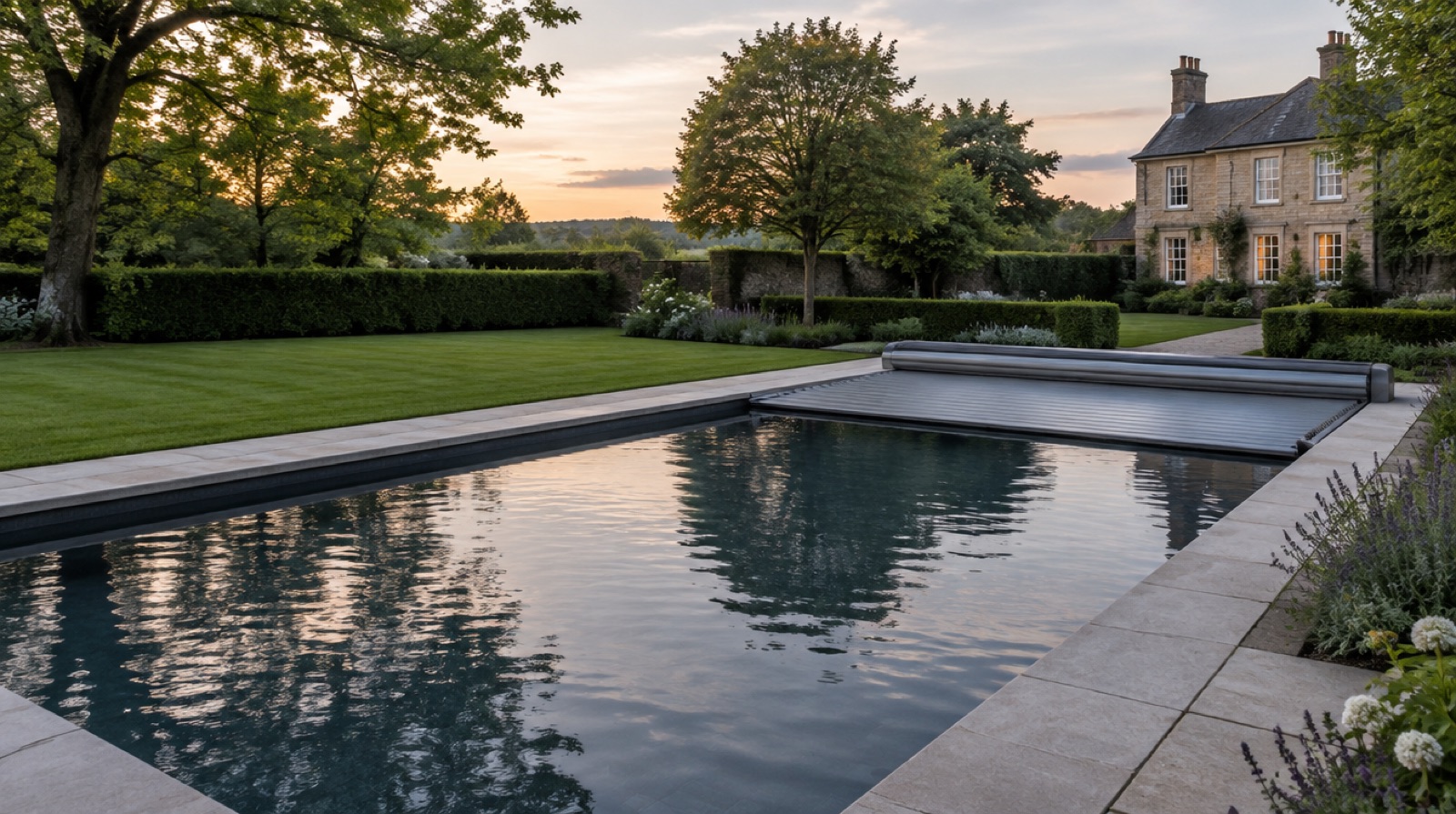
What an Outdoor Pool Involves
An outdoor pool is shaped by the garden: the views, the levels, the sun path and how the pool relates to the house and terraces. Design is as much about landscape as it is about water.
The engineering focus shifts too:
- Ground and structure. Outdoor shells need to suit the ground conditions, and sloping sites may need retaining walls. In the UK climate the shell should be insulated and designed to cope with frost.
- Heating. Heating is what turns an outdoor pool from a few weeks of use into a proper season. Our guide to outdoor swimming pool heating options compares the main approaches.
- Covers. A good cover keeps heat in, keeps debris out and adds a layer of safety. Automatic covers can be concealed within the pool design so they do not spoil the look of the water.
Outdoor pools are often the more straightforward build, but the finishing and landscaping deserve as much attention as the pool itself.
Planning and Permissions
Planning rules differ between indoor and outdoor pools. An outdoor pool in a garden may fall within permitted development in some cases, while an indoor pool built as an extension or outbuilding is assessed as a building. Listed buildings, conservation areas and green belt sites need extra care either way. Our guide to swimming pool planning permission in the UK explains the rules, and planning constraints are assessed at the initial site assessment, the opening stage of our process.
Cost and Running Considerations
An indoor pool generally involves more construction, because you are building or adapting a room as well as the pool, along with air handling and dehumidification. An outdoor pool avoids most of that, but needs heating and a cover to make the most of the season.
Running considerations differ in the same way. Indoors, you are managing air and water temperature and humidity all year. Outdoors, heat loss is the main factor, which is why covers matter so much. Whichever you choose, water treatment and plant design make a real difference to day-to-day running; we advocate the Dryden Aqua SPACE system for its automated dosing and backwashing. Our guide to swimming pool costs in the UK explains what drives the price of each type.
Indoor or Outdoor: A Quick Comparison
| Indoor pool | Outdoor pool | |
|---|---|---|
| Swimming season | All year | Seasonal, extended by heating and covers |
| Main engineering focus | Structure, ventilation, dehumidification | Ground conditions, frost resistance, heating |
| Planning | Usually assessed as a building or extension | May be permitted development in some cases |
| Design driver | The home and the room | The garden and the landscape |
| Best suited to | Daily fitness, therapy, year-round family use | Summer living, landscape settings |
Frequently Asked Questions
Is an indoor or outdoor pool better in the UK?
It depends on how you will use it. An indoor pool is the only way to swim comfortably all year, while an outdoor pool suits households who mainly want to swim in the warmer months and value the garden setting.
Does an indoor pool cause damp in the house?
Not if it is designed properly. Correctly sized ventilation and dehumidification, designed alongside the heating, control the moisture an indoor pool produces and protect the building fabric.
Can you use an outdoor pool in winter in the UK?
Some owners do, but most outdoor pools in the UK are used seasonally. Heating and a good cover extend the season considerably.
Do I need planning permission for an indoor pool?
An indoor pool built as an extension or outbuilding is usually assessed as a building, so planning and building regulations need to be considered early. The position depends on your property and site.
Can an outdoor pool be enclosed later?
It is sometimes possible, but enclosing a pool changes the engineering, because air handling and dehumidification then become essential. If year-round swimming might matter later, it is better to discuss it at the design stage.
Summary
The indoor vs outdoor swimming pool decision is really a decision about how you want to live with your pool. Indoors gives you year-round swimming and a pool that becomes part of the home, with the structural and air-handling engineering that requires. Outdoors gives you the garden, the light and the landscape, with heating and covers deciding the length of your season. Preston Pools designs, engineers and builds both in-house, for homes across the UK. To talk through which would suit your home, arrange a design consultation.