There is no single number that suits every pool. What temperature a swimming pool should be depends on who is swimming, how hard they are swimming, and whether the pool is indoors or outdoors. A pool for steady lengths is set differently from one for relaxed family time, and a therapy pool runs warmer than both.
This guide explains how swimming pool temperature works in a home pool, where the published figures come from, and what that means for the way you plan and heat your own.
Why there is no one best pool temperature
The best pool temperature is a trade-off between comfort and effort. What feels comfortable depends on what you are doing: water that feels pleasant when you are relaxing may feel different once you are swimming hard.
That is why different groups of swimmers want different things:
- Fitness swimmers are working hard, and many find cooler water more comfortable.
- Families and casual swimmers are often moving more slowly or playing, and many find warmer water more comfortable.
- Hydrotherapy pools are designed for treatment, rehabilitation and sensory therapy, and are run at a distinctly higher temperature.
When we design a pool, we ask about all of these uses first, because the answer shapes the heating, the water treatment and, for indoor pools, the ventilation.
What the official figures say
For competition swimming, the governing body is clear. Swim England states that in a competitive pool the water temperature must be kept constant between 25°C and 28°C, and notes that this can be a challenge for some outdoor pools.
That range is a useful reference point for serious swimming, but it is a competition requirement, not a target for a home pool. Most people swimming for pleasure at home will want to settle on a temperature that feels right for their household, within what the pool’s heating can deliver.
Warm-water and hydrotherapy pools
At the other end of the scale sit hydrotherapy pools. These are warm-water pools run at therapeutic temperatures of 34–36°C, which is noticeably warmer than a standard swimming pool. They are designed for treatment, rehabilitation and sensory therapy rather than exercise alone.
That higher temperature changes the engineering. Warmer water places greater demands on filtration, water treatment, ventilation and energy management, so a hydrotherapy pool is specified differently from the start rather than adapted from a standard design. Our hydrotherapy and accessible pools page explains how we design them, in consultation with the client, their family and, where appropriate, their clinical or therapeutic team.
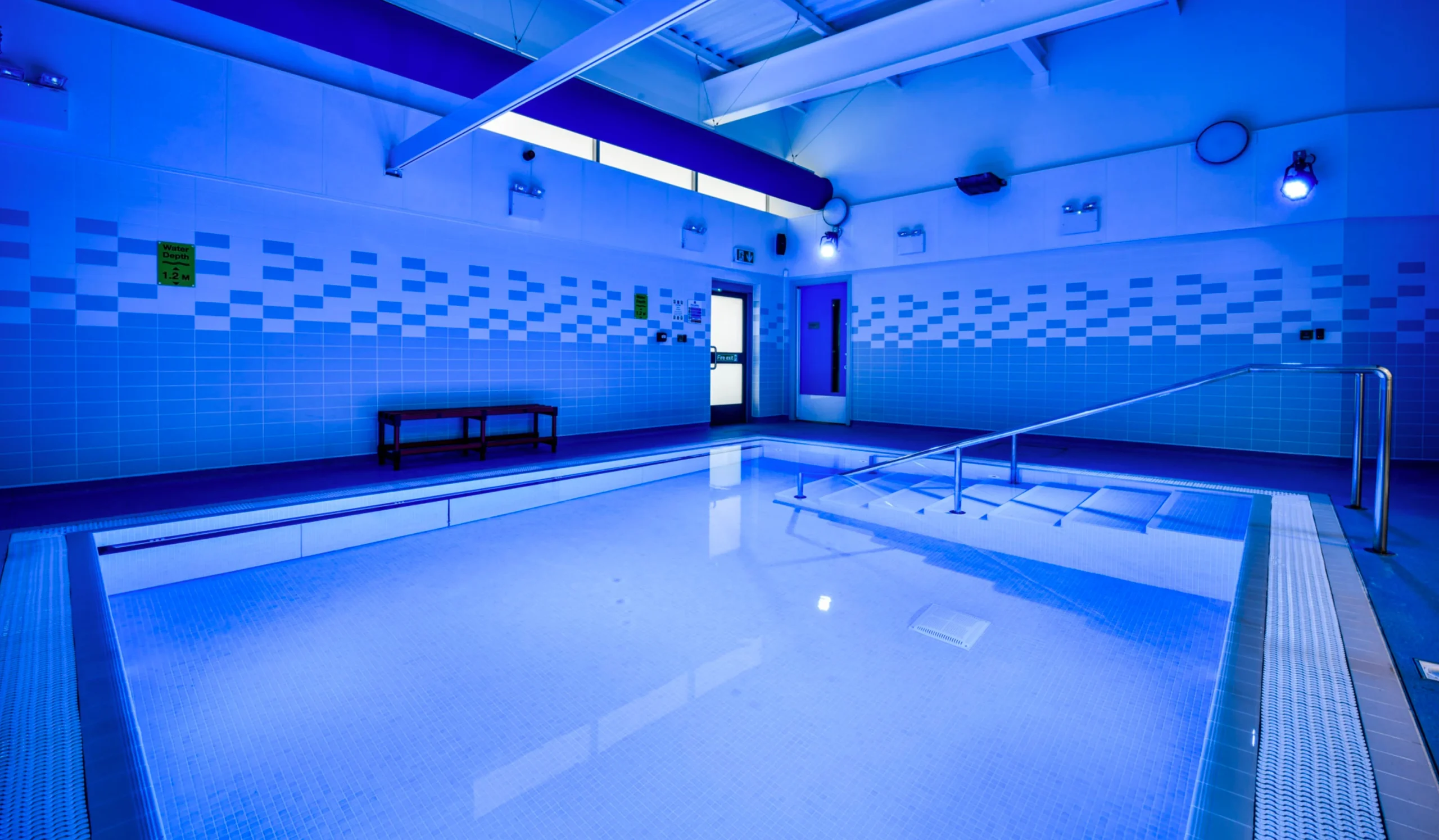
A good example is Foxfield School in the Wirral, where we built two pools side by side: a hydrotherapy pool maintained at 35°C and a separate 10m teaching pool. Each had different temperature, filtration and ventilation requirements, and the two share ventilation and water treatment infrastructure. Both pools have automatic slatted covers. It shows how differently two pools in one building can be run.
Outdoor heated swimming pools
An outdoor pool without any heating will typically only be comfortable during the warmest weeks of summer. An outdoor heated swimming pool extends that window at both ends of the season, and in some setups allows swimming well into autumn or from earlier in spring.
How warm you can comfortably keep the water depends on the heating method and how well the pool holds its heat. The main options are:
- Solar heating, which warms the water as it circulates. It has a low running cost, but the output varies with the sunshine.
- Heat pumps, which draw heat from the surrounding air and give consistent, controllable heating across the season.
- Gas boilers, which heat quickly, so they suit a pool that is warmed just before a swim, but cost more to run for long periods.
- Pool covers, which reduce heat loss and evaporation when the pool is not in use and support whichever method you choose.
Many owners pair a heat pump with a cover for the best balance of steady heat and manageable running costs. We compare all of these in our guide to outdoor swimming pool heating options.
One practical point: if you want predictable water temperatures whatever the weather is doing, a heat pump is more likely to deliver that than solar alone. If you mostly swim in summer and are happy with some variation, solar and a cover may be enough.
Indoor pools and temperature
An indoor pool is not at the mercy of the weather, so holding a steady water temperature all year is far simpler. The room itself needs just as much thought, though. Ventilation and dehumidification have to be calibrated to protect the building fabric and keep the space comfortable, which is why we plan them from the first drawing on our indoor and basement pools. Warmer water puts more moisture into the air, so the higher you set the water temperature, the more the air handling has to do.
If you are weighing indoor against outdoor, our guide to indoor vs outdoor swimming pools covers how swimming season and comfort differ.
Temperature for lap and fitness swimming
If your main aim is regular fitness swimming, think about temperature at the design stage. Our lap and fitness pools are built around how you actually swim, and water temperature, air handling and the rest of the specification are planned together. A fitness pool is also where a consistent, controllable heating system tends to matter most, because you are likely to swim at set times whatever the weather.
Practical ways to get the temperature you want
- Decide the main use first. Fitness, family time and therapy all point to different temperatures.
- Plan heating early. Heat pumps and boilers need space, ventilation and access, so they are best planned alongside the rest of the plant rather than added later.
- Use a cover. It reduces heat loss, so your heating works less hard.
- Think about running costs honestly. A warmer pool costs more to keep warm. Talk through the trade-off before you settle on a target temperature.
The right swimming pool temperature is the one that suits the people using the pool, and that the heating and design can hold reliably. If you would like help working that out for your own project, get in touch and we will talk through your space and how you want to use the water.
Frequently asked questions
What temperature should a swimming pool be?
It depends on the use. Swim England states that competitive pools must keep the water between 25°C and 28°C. Hydrotherapy pools are run much warmer, at 34–36°C. For a home leisure pool, the right temperature is mostly a matter of what your household finds comfortable.
What is the best pool temperature for fitness swimming?
Many fitness swimmers find cooler water more comfortable than casual swimmers do. The competition range of 25°C to 28°C from Swim England is a useful reference, but your own comfort is the real guide.
Can you heat an outdoor pool in the UK?
Yes. Solar heating, heat pumps and gas boilers can all heat an outdoor pool, and a cover helps keep the warmth in. Many owners combine two methods, such as a heat pump and a cover.
Is a heated pool expensive to run?
Running costs depend on the heating method, the size of the pool, how well it is covered and how many months of the year it is heated. Solar is generally the lowest, heat pumps sit in the middle and gas boilers cost more over long periods.
Why are hydrotherapy pools warmer than normal pools?
They are designed for treatment, rehabilitation and sensory therapy rather than exercise alone, so they run at 34–36°C. That higher temperature also puts greater demands on filtration, water treatment, ventilation and energy management.
Does an indoor pool hold its temperature better than an outdoor pool?
An indoor pool is not exposed to the weather, so a steady temperature is easier to maintain all year. The room still needs proper ventilation and dehumidification, which we plan from the start.