A hydrotherapy pool is not simply a warmer swimming pool. It is a purpose-built space where water, temperature, access and atmosphere are all planned around the people who will use it. Whether you are a homeowner or a school governor, it helps to understand what these pools offer and what good accessible design involves.
What makes a hydrotherapy pool different?
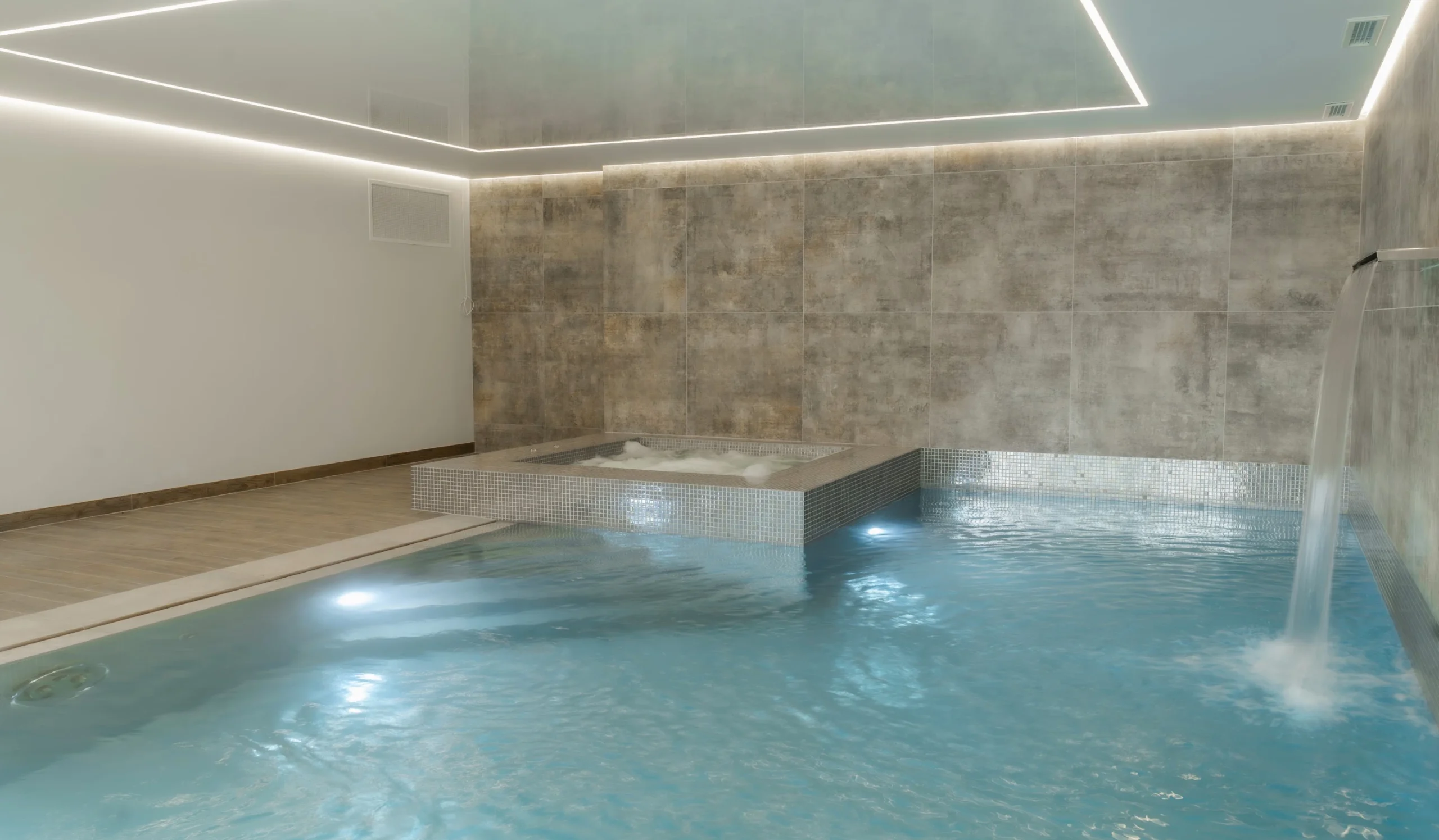
The defining feature is warmth. A hydrotherapy pool is kept at a therapeutic temperature of 34 to 36°C, which is noticeably warmer than a conventional leisure pool. It is designed for rehabilitation and sensory sessions rather than for lengths and fitness swimming.
That warmth changes everything behind the scenes. Heating the water to this level puts extra demand on filtration, water treatment, ventilation and energy management, so these pools need to be specified as hydrotherapy pools from the very first drawing. That is why specialist hydrotherapy pool builders approach the engineering differently from the start.
The benefits people look for
Many families and institutions turn to warm water because of how it feels to be in it. Buoyancy takes the weight off the body, the water is warm, and it offers gentle resistance as you move.
For this reason hydrotherapy pools are used for rehabilitation, for people living with limited mobility, and for sensory sessions. The pool can be a place for therapy, but it can also be a place to relax, to build confidence and to spend time together as a family or class. We would always encourage you to talk through your own situation with your clinical or therapeutic team, because the right specification depends on the person using the pool.
What accessible design actually means
Accessibility is not a ramp bolted on at the end. It is a set of decisions that shape the whole room. The aim is simple: people should be able to enter, move around and leave the water safely, with dignity and as much independence as possible.
Entry methods. There is no single right answer, because users differ. Options include submersible platforms that lower from the deck into the water, ceiling-track hoists, gentle-gradient ramps and long step entries. Some people will want to walk in, some will transfer from a wheelchair, and some will need support. Good design often combines methods so that more people can use the same pool.
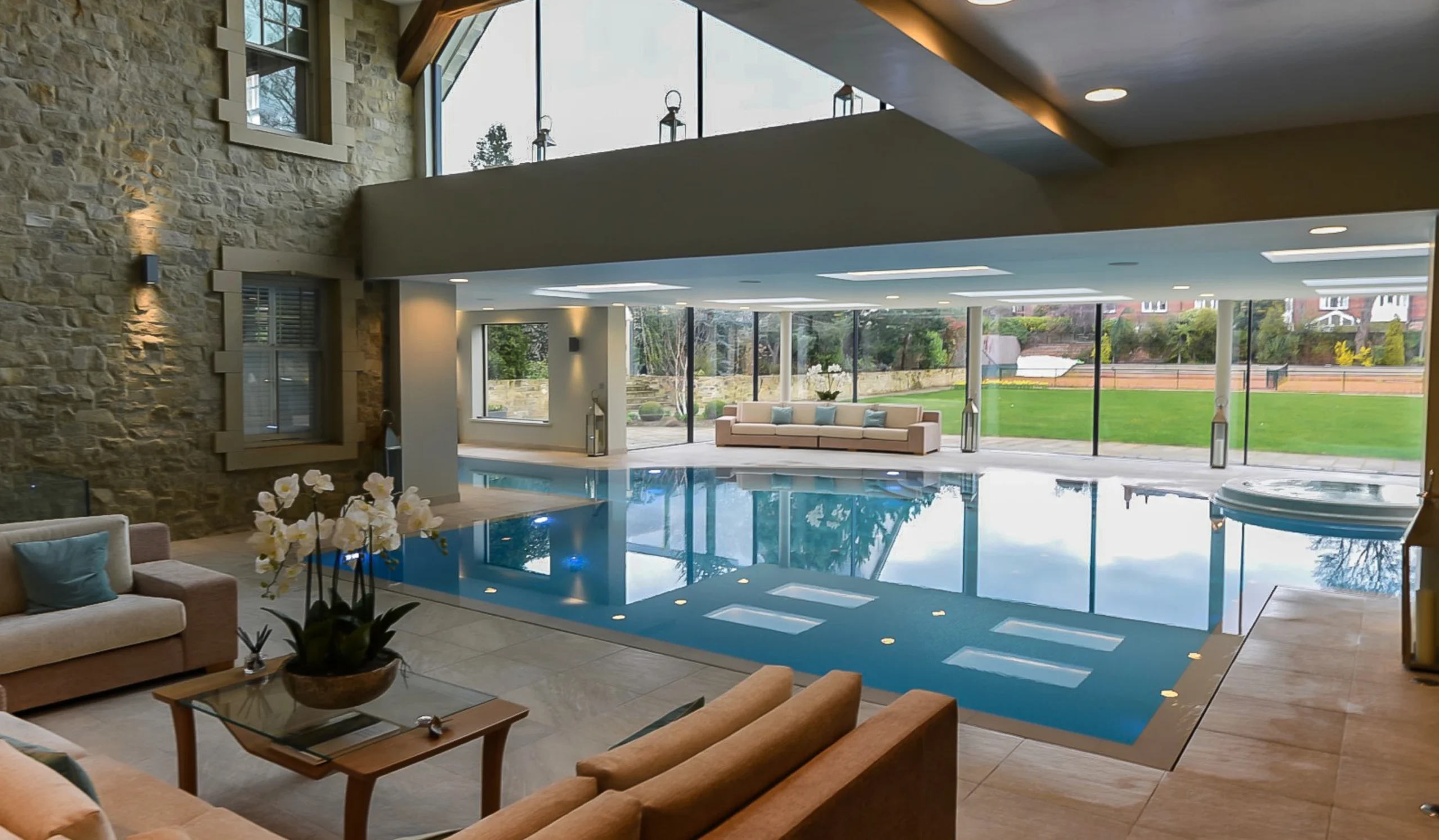
Level-deck access. A level-deck pool has water that sits close to the surrounding floor, so there is no awkward climb over a raised edge. This makes wheelchair transfer far easier and makes the whole space feel welcoming rather than clinical.
Handrails and surfaces. Bespoke handrails, grab-rails around the edge and non-slip finishes give users something reliable to hold and a surface they can trust, which supports confidence for everyone, staff and family included.
Sensory lighting. Colour-change lighting can turn a pool into a calming or stimulating environment, depending on the session. It is a feature that matters a great deal in special educational settings.
Water temperature and ventilation. Warm water means warm, humid air, so the room needs properly planned ventilation to stay comfortable and protect the building. Temperature control and air handling are as much part of accessible design as any entry system.
The wider environment. Changing facilities and the route to the pool all count, because a well designed pool in a poorly planned building is still hard to use.
Lessons from two school projects
Schools bring these principles together because their pools are used daily by many pupils with different needs.
At Sir Tom Finney Community School in Preston, we built an 8m × 6m level-deck hydrotherapy pool as part of the school’s redevelopment. Pupils get grab-rails along the pool edge and a long step entry, so getting in and out feels secure. The room has colour-change lighting for sensory sessions, UV treatment for the water and an air-sock ventilation system. An automatic slatted cover keeps the heat in and adds safety.
At Foxfield School on the Wirral, the brief asked for two pools side by side: a hydrotherapy pool and a separate teaching pool. The hydrotherapy pool measures 5.6m × 4.4m and is held at 35°C, with sensory lighting. Both pools have level-deck edges and long step entries, and they share ventilation and water treatment infrastructure. Pupils can move between warm-water and teaching-pool sessions in one visit.
Both show that accessibility works best as the starting point rather than an afterthought.
Considerations for schools and institutions
An institutional pool is used far more heavily than a domestic one, so plant has to be sized to run almost constantly, and the build has to fit around term dates and the wider site programme. Public-use standards apply from the outset. If you are scoping this kind of project, our work as commercial pool contractors explains how we approach schools, care settings and leisure facilities.
Considerations for private homeowners
At home, the questions are more personal. Who will use the pool, how do they prefer to enter the water, and who will help them? Is the pool part of a new extension, a basement, or an existing property? We design around the individual, often alongside the family and their therapeutic team, so that the finished pool suits daily life as well as the specification.
Our six-stage design and construction process begins with a conversation and a site assessment, then moves through design, engineering, construction, commissioning and aftercare. That sequence is as relevant to a single home pool as to a school facility.
Planning your own hydrotherapy pool
If you are at the early stage, write down who the pool is for, how they will get in and out, and what the room will need to be like. You do not need all the answers. Our team can help you shape them and explain what is possible within your space.
To talk it through, take a look at our hydrotherapy and accessible pools service and arrange a consultation. We would be glad to hear about your project.