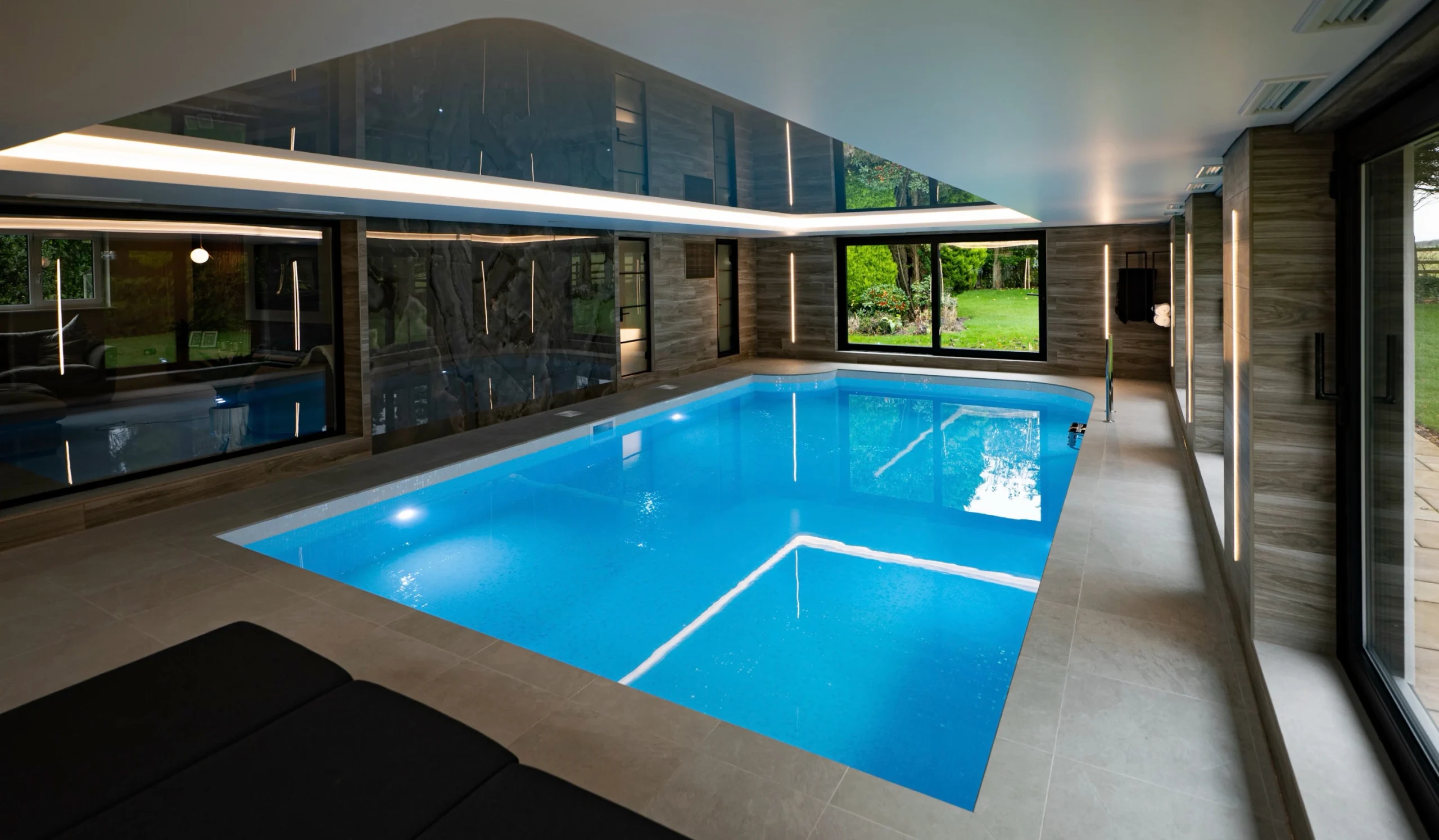
Swimming pool construction looks mysterious from the outside. One day there is a garden or an empty room, and some time later there is a finished pool. What happens in between is a sequence of carefully ordered stages, and understanding it makes a project far easier to plan and live through.
This guide walks through how a pool is built, stage by stage, following the six-stage approach we set out on our process page. If you want to know how long it all takes, that is covered in our separate guide to how long a swimming pool takes to build. Here we are focused on what actually happens at each point.
Why the order matters
Building a swimming pool is a chain of dependent decisions. The design depends on the site, the engineering depends on the design, and the finishes depend on a structure that has been built and cured correctly. Skipping ahead, or changing the design mid-build, is what causes most of the trouble on pool projects. A clear sequence, agreed before work starts, is the best protection against surprises. At Preston Pools, one in-house team manages every discipline, from architectural drawings and structural engineering through to build, finishing and commissioning, with a single point of contact throughout.
Stage 1: Initial consultation and site assessment
Every project begins with a conversation. How do you intend to use the pool? What is the architectural context of the property? Is it a lap pool for daily fitness, a hydrotherapy suite or a statement indoor pool?
Alongside the conversation comes a thorough site assessment covering structural considerations, access, drainage, ventilation requirements and any planning constraints. This is where the real shape of the project starts to appear. Our guide to swimming pool planning permission in the UK explains why it matters to look at planning early, and you should always check with your local planning authority for your own property.
The site is especially important for basement pools. At Venika’s Pool in Wilmslow, a basement pool sits beneath a glass ceiling with a grand piano visible overhead, which meant careful structural and waterproofing coordination. Our guide to basement swimming pool conversions covers what that involves in more detail.
Stage 2: Design development
This is where the design takes shape. Detailed plans and specifications are developed for your pool within the context of your property. You should understand the proportions, the materials, the lighting and the relationship between the pool and its surroundings before a single element of construction begins.
It is also the stage where the most meaningful conversations happen. You can explore tile finishes, lighting configurations, water features and layouts with complete clarity, which replaces guesswork with confidence. A pool that is fully resolved on paper is far less likely to need changes once the excavation or building work is under way.
Stage 3: Engineering and technical specification
Once the design is approved, the engineering team produces a comprehensive technical specification. It covers:
- structural design
- hydraulic calculations
- filtration and water treatment systems
- heating
- ventilation and dehumidification
This is the invisible work that determines the longevity and performance of the pool. For basement and indoor installations, this stage also includes detailed coordination with your architect and main contractor so the pool fits the wider build programme.
The engineering decisions respond to the site. At Paula’s pool on the Isle of Anglesey, a 20m outdoor pool on an exposed coastal site, the specification includes a primary heat exchanger paired with a backup unit, layered ozone and UV water treatment and a concealed safety cover. Those choices came from the demands of the location, not from a standard template.
Stage 4: Construction and project management
This is the stage most people picture: the groundworks and structure. The sequence generally runs from excavation and steelwork to the concrete shell, followed by pipework, filtration, heating, dosing and controls. On indoor projects, air handling is installed at this point too.
Some parts of this stage cannot be hurried. Ground conditions matter everywhere, and the concrete shell needs time to cure properly. A builder who shortcuts that is storing up problems for you.
Project managers oversee every day of the construction. Preston Pools has eighteen in-house specialists and nine fully equipped vehicles, which helps maintain momentum and quality control without relying on subcontractors for critical works. You receive regular updates and have one person to ask when you have a question. We also coordinate with the other trades on site and manage the programme to minimise disruption to your property and your schedule.
Building a pool is rarely just about the pool. At Eastlands in Gosforth, an indoor pool with an underwater viewing window into the cinema room added significant structural and waterproofing complexity, and the new extension had to tie back into the existing stone house. Complexity like that is why the earlier stages exist.
Stage 5: Finishing and commissioning
The finishing stage is where the project stops looking like a building site. Bespoke tiling, custom water features, integrated lighting and precision detailing are all completed by the specialist team. Tiling can include natural stone, glass mosaic, porcelain and metallic finishes, each chosen for slip resistance and performance under water.
A pool is not finished until every element has been inspected and every system tested. Commissioning then includes:
- filling the pool and balancing the water
- calibrating the systems
- a comprehensive handover with documentation and guidance on maintaining your pool
The finished result can be quietly impressive. At Rod’s Pool in Northwich, lighting across a range of natural stone and recessed colour-change LEDs in a stretched vinyl ceiling are controlled from an iPad. The detail you see on handover day is the product of every earlier stage.
Stage 6: Aftercare and ongoing support
A good handover is not the end of the relationship. We offer ongoing maintenance guidance and remain available to support you with any aspect of your pool’s operation. We provide handover guidance and can recommend trusted maintenance providers in your area, and we can arrange periodic inspections or servicing where required. Many of our clients choose to maintain their pools themselves with our advice.
We also recommend the Dryden Aqua SPACE disinfection and filtration system, which handles chemical dosing, backwashing and water-level top-up automatically where it is specified.
How the stages fit together
Seen as a whole, the pattern is simple: decisions are made early, when they are cheap to change, and the build follows a plan that has already been tested on paper. Timescales vary with the type of pool. As a general guide, a straightforward outdoor pool might take 12 to 16 weeks from approved design to completion, while indoor and basement pools integrated into a wider build can take 6 to 12 months once coordination with the main programme is taken into account. We provide a detailed programme at the design stage so you know what to expect.
Frequently asked questions
What is the first step in building a swimming pool?
An initial consultation and site assessment. We discuss how you will use the pool and assess structure, access, drainage, ventilation and planning constraints before any design begins.
Who manages the construction?
Our project managers oversee every day of the build, supported by our in-house specialists. You have a single point of contact throughout and receive regular updates.
Do I need planning permission to build a pool?
It depends on your property and the type of pool. In many cases a pool within the curtilage of a residential property falls under permitted development, but listed buildings, conservation areas and certain outdoor installations may need formal consent. Check with your local planning authority; we can advise on your property and support an application where needed.
Can you work with my architect and builder?
Yes. Many of our pools are delivered as part of a wider new build or renovation, and we coordinate directly with architects, structural engineers and main contractors. The earlier we join the project team, the more smoothly the pool fits the overall build.
What happens when the pool is finished?
Commissioning covers water treatment balancing, system calibration and a handover with documentation and guidance. Support continues afterwards, including technical advice.
How long does each stage take?
It varies with the pool and the site. Our guide to how long a swimming pool takes to build explains the timescales in detail.
To see how the stages work in full, visit our process page, or get in touch to arrange a design consultation.