The right swimming pool for your garden depends less on a catalogue of shapes and more on how you want to use the water. The main types of pools for gardens are the classic outdoor pool, the infinity pool, the lap or fitness pool, a pool in a garden building, a hydrotherapy pool and, at the smaller end, a swim spa.
Here is how each works, who it suits and what to think about before you choose. Whichever you pick, a good swimming pool design starts with your garden, your house and your habits, not with a standard model.
Outdoor garden pools
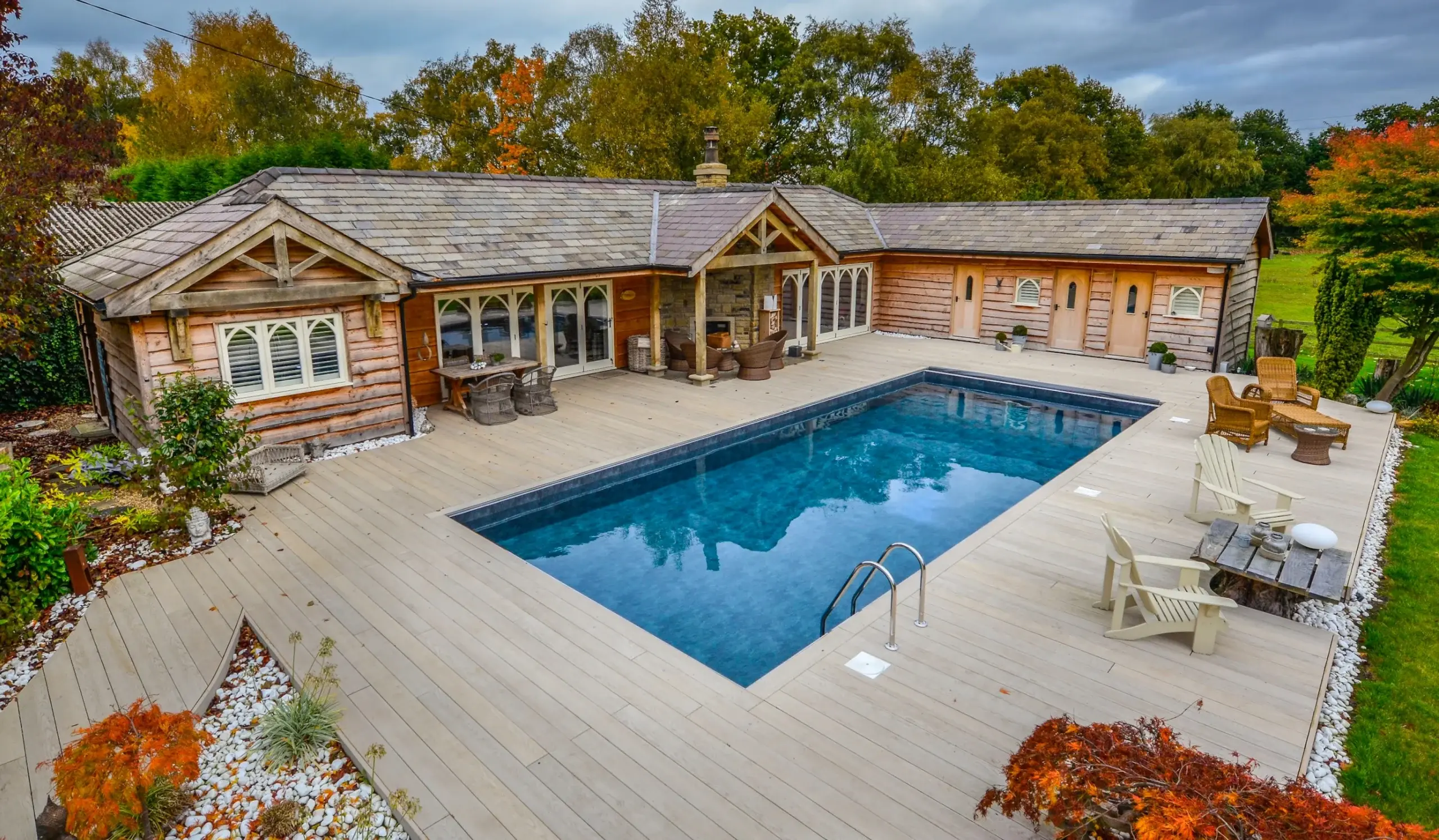
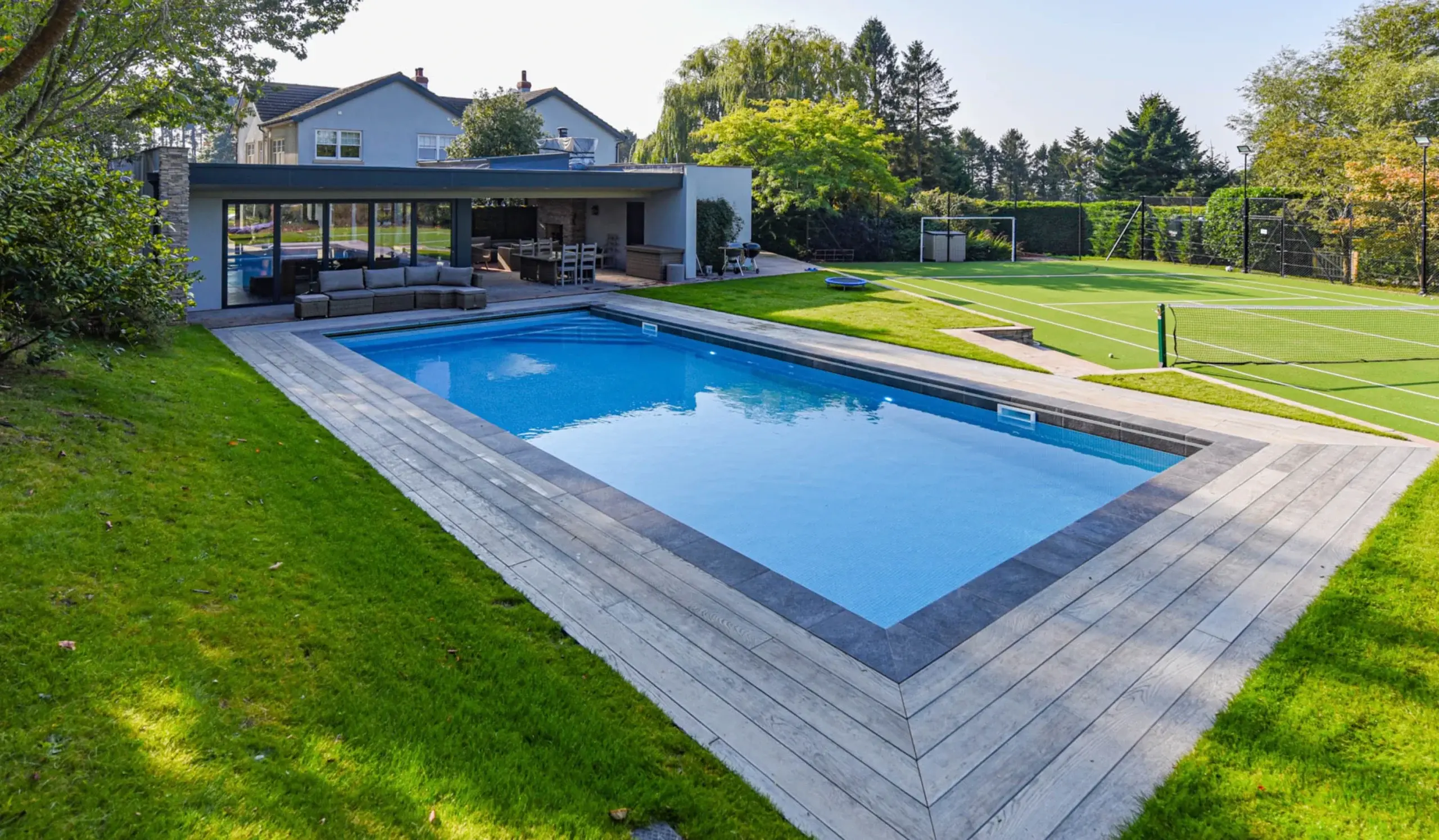
A classic outdoor pool turns the garden into a place to spend time. It extends your living space and, with good design, looks as though it has always belonged there. Everything starts below ground: foundations are engineered for the site’s ground conditions, and a fully tanked concrete shell with a bonded waterproof membrane forms the structure, finished in materials such as stainless steel or mosaic tile.
Our recent outdoor work shows the range. Willington Rise in Tarporley is a generous 11m skimmer pool in secluded West Cheshire countryside, paired with a garden annex holding a bar and covered dining area. On the Isle of Anglesey, our award-winning 20m pool and spa overlooks the Menai Strait. Both are good examples of a pool that sits comfortably in its landscape. See all of our outdoor and infinity pools.
If you plan to swim outside the warmest weeks, think about heating from the outset. Our guide to outdoor swimming pool heating options explains the choices.
Infinity pools
An infinity, or vanishing-edge, pool is designed so the water appears to spill into the horizon. The effect looks effortless but depends on careful engineering: a balance tank, a calibrated water level, the structural gradient and an overflow system all have to work together.
Not every garden suits a true infinity edge. It reads best where there is a genuine view or level change for the eye to continue past, such as a slope, valley or open countryside. On a flat, enclosed plot, a well-designed skimmer pool is often the better choice. Our guide to how infinity pools are designed and built goes into more detail.
Lap and fitness pools
A lap pool is defined by its purpose. Length supports a sustained stroke, width allows a clean turn and depth supports good technique. Whether you picture daily lengths or a full training routine, the starting point is how you actually swim.
Space does not always allow a full-length pool, and there are two routes. At South Lodge in Lytham St Annes, we built a 25m short-course lap lane alongside a family play area. At Grange-over-Sands, a compact 4m pool with a powerful counter-current swimjet lets the owner swim continuously without a full-length footprint. Both are covered on our lap and fitness pools page, and our guide to lap pool dimensions helps you size one.
Garden pool houses and indoor pools
You do not have to swim outdoors in the open. A pool can sit in a purpose-built pool hall, an extension, an outbuilding or beneath the house, and each is planned around ventilation, dehumidification, structure and waterproofing from the first drawing.
Two of our projects show how a garden building can work. At Hamilton Lodge in Knutsford, an outdoor pool is set around an existing garden summer-house that also holds a tiled spa and steam room. At Frodsham, a stone-clad outbuilding was fitted with a pool hall, spa, sauna and steam room designed to feel open to the garden in fine weather. If a building is part of your plan, see our indoor and basement pools, and for help weighing the two approaches, read indoor vs outdoor swimming pools.
Hydrotherapy and accessible pools
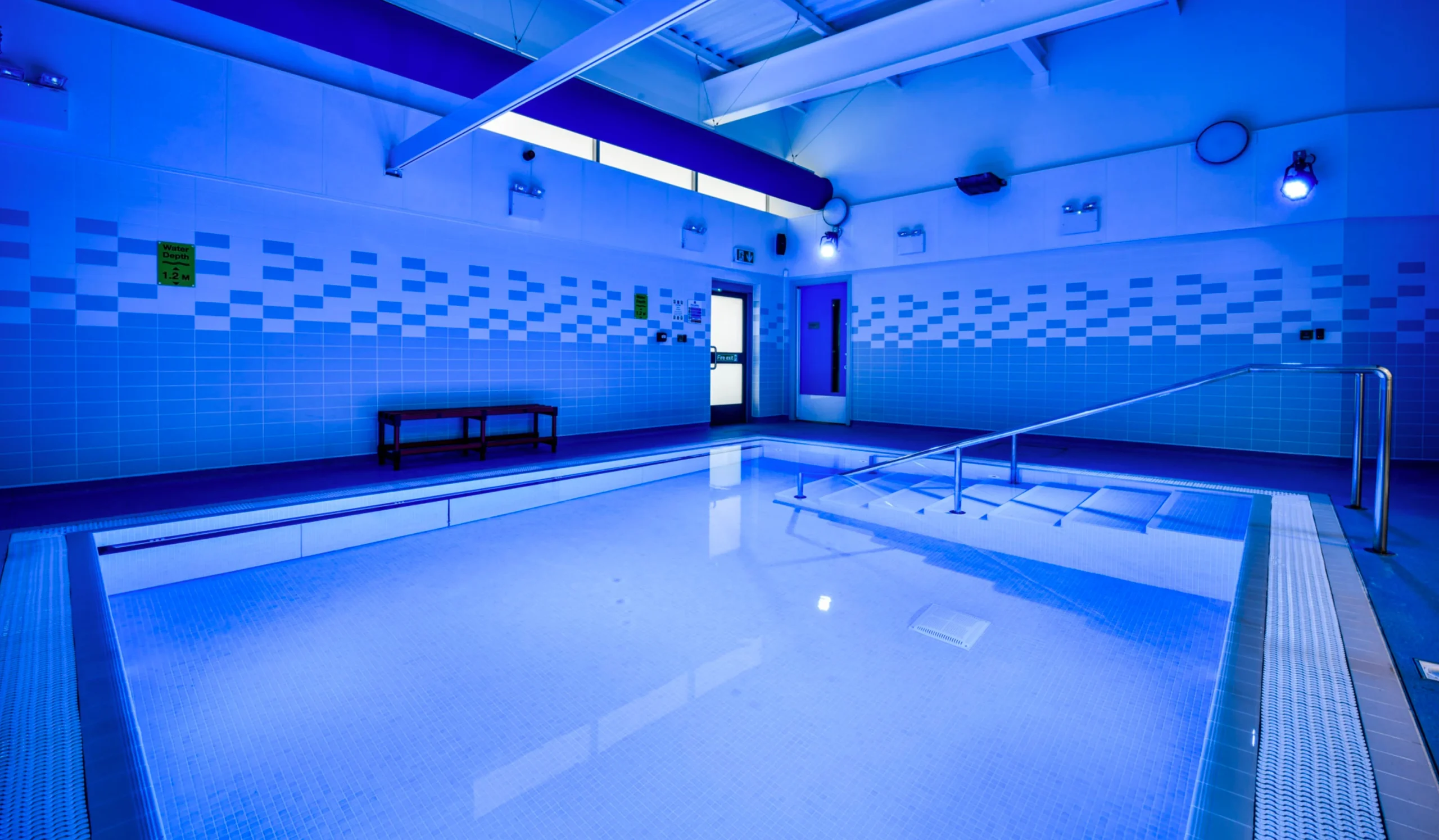
A hydrotherapy pool is a warm-water pool for treatment, rehabilitation and sensory therapy, rather than exercise alone. It runs at 34–36°C, noticeably warmer than a standard pool, so it is specified differently from the start, with extra demands on filtration, water treatment, ventilation and energy management.
Access matters as much as temperature. Options include submersible platforms, hoists, gentle-gradient ramps and level-deck designs, chosen to suit each user. Barton is a residential hydrotherapy pool built as a calm, accessible space the whole family could share. Read more on our hydrotherapy and accessible pools page.
Swim spa or swimming pool?
A swim spa is a compact, self-contained unit that generates a steady current, so you swim on the spot against the flow. A swimming pool is a permanent, built-in structure designed around your home. A swim spa suits a smaller garden, courtyard or terrace and is quicker to install. A pool needs real space and planning, but is bespoke to your property and gives you room to swim freely and for the family to share.
Our comparison of swim spa vs swimming pool sets out the differences in detail.
How to choose the right type for your garden
- Start with use. Fitness, family time, entertaining and therapy lead to different pools.
- Read the site. Slope, views, ground conditions, access and orientation all influence what will work.
- Be honest about the season. If you want to swim for more of the year, consider a heated outdoor pool or a pool building.
- Plan the whole garden. Pool, terrace, plant and any building should be designed together.
- Think about cost drivers, not sizes. Ground conditions, edge detail, finishes and heating influence the investment more than surface area alone.
Planning permission
Many private garden pools fall within permitted development rights, but there are common exceptions, such as listed buildings, conservation areas and pools close to a boundary, and indoor or basement pools involving structural work can need permission or building regulations approval. This is general information, not advice for your property, so always check with your local planning authority. Our guide, do you need planning permission for a swimming pool, explains the questions to ask.
If you are weighing up which type of pool suits your garden, get in touch. We will look at your site and how you want to use the water, and talk through what is possible.
Frequently asked questions
What are the main types of pools for gardens?
The main types are outdoor skimmer pools, infinity pools, lap and fitness pools, pools in garden buildings or pool houses, hydrotherapy pools and swim spas.
Which type of pool suits a small garden?
A swim spa suits a smaller garden, courtyard or terrace. A compact lap pool with a counter-current swimjet can also work where a full-length pool will not fit.
Does every garden suit an infinity pool?
No. An infinity edge works best where there is a real view or level change for the water to fall towards. On a flat, enclosed plot, a well-designed skimmer pool is often better.
Can I swim in my garden pool all year?
An unheated outdoor pool is typically only comfortable in the warmest weeks of summer. Heating extends the season, and a pool inside a building allows year-round swimming.
Do I need planning permission for a garden swimming pool?
Often not, but it depends on your property and location, and some situations need permission or building regulations approval. Check with your local planning authority before design work begins.
What is the difference between a swim spa and a swimming pool?
A swim spa is a compact self-contained unit with a current to swim against. A swimming pool is a permanent built-in structure with more room, designed around your home.